


Real Estate vs Stock India – The eternal debate of real estate investment in India versus the stock market remains relevant in 2025, as Indian investors navigate an evolving economic landscape. Both options offer unique benefits and challenges, making the choice largely dependent on individual financial goals, risk tolerance, and investment timeframes.
Investors in India are constantly looking for ways to maximize their wealth while minimizing risk, which is why the comparison between Real Estate vs Stock Market investments is more critical than ever. While some prefer the security and stability that comes with owning property, others are drawn to the high potential returns and liquidity of the stock market. Regardless of preference, making the right decision requires a thorough understanding of both asset classes.

This comprehensive guide will help you evaluate the pros and cons of real estate and stocks, compare their performance, and decide which one aligns with your financial objectives. Whether you are a first-time investor or someone looking to diversify your portfolio, understanding the nuances of Real Estate vs Stock India is crucial for making informed investment choices in 2025.
Understanding Real Estate Investment in India
Investing in real estate in India has always been popular, driven by the tangible nature of property and its cultural significance. With urbanization accelerating and the demand for residential and commercial properties continuing to grow, the sector remains an attractive option for long-term investors. The emotional and financial security of owning property plays a significant role in making real estate investment in India a preferred choice for many families.
Advantages of Real Estate Investment
- Tangible Asset – Real estate offers the security of owning a physical asset, which can be used, rented, or sold as needed. Unlike stocks, where ownership is intangible, property provides a sense of permanence.
- Consistent Income Stream – Rental income provides a steady cash flow, supplementing your earnings. A well-located property can generate significant passive income, ensuring financial stability even in uncertain times.
- Potential for Capital Appreciation – Over time, property prices in cities like Mumbai, Delhi, and Bangalore tend to rise, offering significant returns. The real estate market in India has witnessed steady appreciation, especially in high-demand urban centers.
- Inflation Hedge – Real estate prices often rise with inflation, preserving purchasing power. As inflation increases, rental income and property values typically adjust, making it a solid hedge against rising costs.
- Leverage Opportunities – Home loans allow investors to purchase properties with minimal upfront payment, amplifying returns when property values increase. Leveraging borrowed capital can significantly boost an investor’s purchasing power.
Drawbacks of Real Estate Investment
- High Entry Cost – Real estate requires a substantial initial investment, limiting accessibility for many investors. Unlike the stock market, which allows fractional investing, purchasing property often demands large capital.
- Illiquidity – Selling property takes time, making it unsuitable for short-term goals. Unlike stocks, which can be liquidated almost instantly, real estate transactions involve legal formalities and market-dependent timelines. Also Read – Residential vs Commercial Real Estate
- Maintenance and Management Costs – Properties require upkeep and often need professional management. Regular repairs, tenant management, and property taxes add to the overall cost of ownership.
- Market Volatility – Economic downturns or policy changes can significantly impact property values. Government regulations, interest rate hikes, and economic slowdowns can all affect the performance of real estate investments.
Exploring Stock Market Investment in India
The Indian stock market offers opportunities for both short-term profits and long-term wealth creation. Investing in stocks provides exposure to a wide range of industries and companies, making it an appealing choice for those who seek diversified investment opportunities.
Advantages of Stock Market Investment
- High Liquidity – Stocks can be bought and sold quickly, providing flexibility and ease of access to funds. Unlike real estate, where transactions take time, stocks allow investors to react swiftly to market changes.
- Low Initial Investment – Investors can start with as little as ₹500, making it accessible to everyone. The ability to invest small amounts regularly makes the stock market a viable option for those with limited capital.
- Higher Long-Term Returns – Historically, the stock market has outperformed other asset classes over a long period. While real estate investments offer stable growth, the stock market vs real estate debate often favors equities when considering long-term wealth creation.
- Diversification – Investing across sectors and companies reduces risk while maximizing returns. Diversified portfolios mitigate the impact of poor-performing stocks.
- Dividend Income – Certain stocks provide regular dividends, adding a passive income stream to your portfolio. This feature makes stocks appealing for those seeking periodic income without the hassle of property management.
- Ease of Management – Stocks do not require physical maintenance, unlike real estate investments in India. There are no tenants, maintenance costs, or legal issues involved.
Drawbacks of Stock Market Investment
- Volatility – Stock prices can fluctuate significantly in the short term, making it a risky option for conservative investors. The potential for high rewards comes with greater uncertainty.
- Emotional Investing – Market swings often lead to impulsive decisions, affecting overall returns. Investors who lack patience or discipline may make poor investment choices based on short-term fluctuations.
- Complexity – Successful investing requires understanding financial statements, market trends, and economic indicators. Unlike real estate vs stocks, where property investment is more straightforward, stock market investments require continuous learning and monitoring.
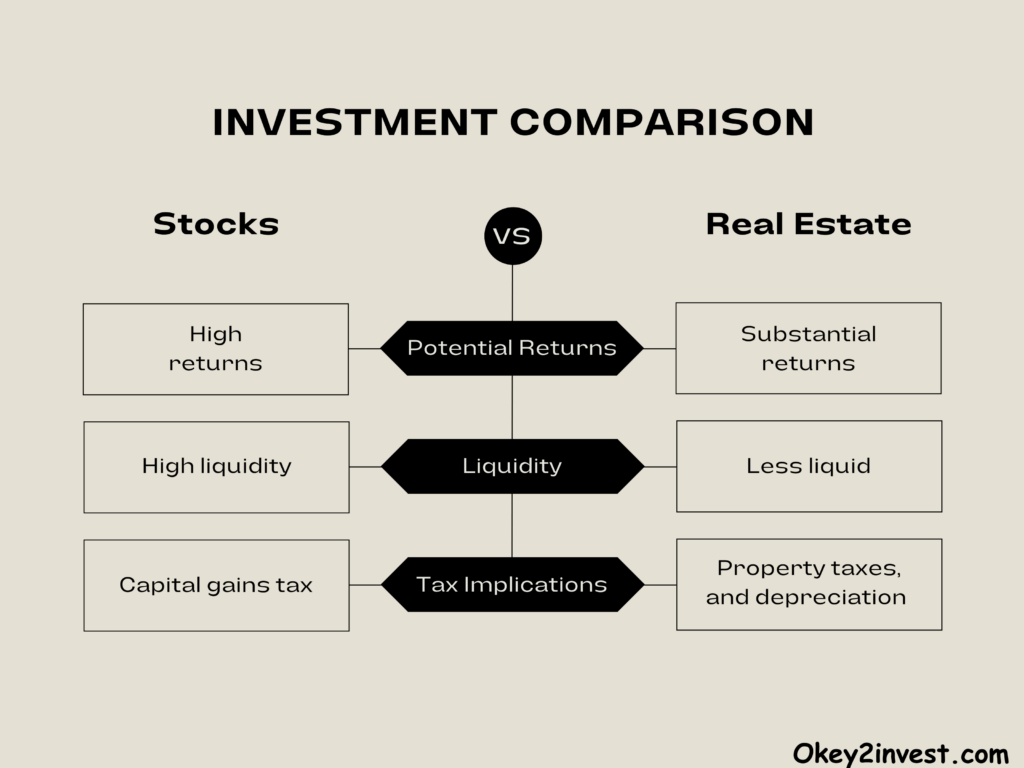
Real Estate vs Stock India: Key Comparison Factors
- Risk and Reward
- Real Estate: Offers stability with steady growth but limited upside in the short term.
- Stocks: High risk due to volatility but potential for exponential returns in the long term.
- Liquidity
- Real Estate: Illiquid, with sales taking months or years.
- Stocks: Highly liquid, allowing for easy entry and exit.
- Capital Requirement
- Real Estate: Requires significant upfront capital.
- Stocks: Accessible to investors with smaller budgets.
- Time Commitment
- Real Estate: Requires time for property management and market research.
- Stocks: Involves monitoring market trends but is less time-intensive.
- Tax Benefits
- Real Estate: Tax deductions on home loan interest but subject to capital gains tax.
- Stocks: Capital gains are taxed, but holding for the long term offers lower rates.
- Returns
- Real Estate: Moderate returns with potential for steady rental income.
- Stocks: High returns, especially in a growing economy like India.
Which Is Better: Real Estate vs Stock India?
Real Estate Is Better If:
- You value owning a tangible asset.
- You seek consistent rental income.
- You prefer long-term stability.
Stocks Are Better If:
- You have a high-risk tolerance.
- You seek higher returns over a shorter period.
- You want liquidity and diversification.
Blending Real Estate and Stock Investments
A balanced approach helps diversify risks and optimize returns:
- Allocate Based on Goals: Invest in real estate for stability and stocks for growth.
- Leverage REITs: Real Estate Investment Trusts provide exposure to real estate vs stocks without large capital requirements.
- Periodic Review: Adjust your portfolio based on market trends and personal goals.

Conclusion
Real Estate vs Stock India – There is no one-size-fits-all response in the real estate against stock market argument. While the stock market gives more profits and flexibility, real estate gives stability and obvious advantages. Both investing choices have special benefits and drawbacks, hence it is imperative to carefully consider them depending on your specific financial circumstances. Real estate investments provide consistent rental income, inflation protection, and long-term appreciation as well as a hedge. Still, they might be somewhat illiquid, have maintenance expenses, and need for large cash. Conversely, the stock market offers chances for major diversity, liquidity, and capital appreciation. It has volatility and market swings even if it offers possible great rewards.
Your investing schedule, risk tolerance, and financial goals will all determine your choice. To optimize profits and lower risk, think about combining asset classes in a strong portfolio. Strategic money allocation allows investors to strike a mix between stability and expansion. Making wise selections about real estate against stocks in India as 2025 develops will assist to ensure your financial future in the evolving investing scene of India. Whether your preferred investment is real estate, equities, or a combination of both, a well-researched strategy will enable you confidently negotiate the complexity of the Indian investment scene.